Tax Saving Investments in Delhi NCR

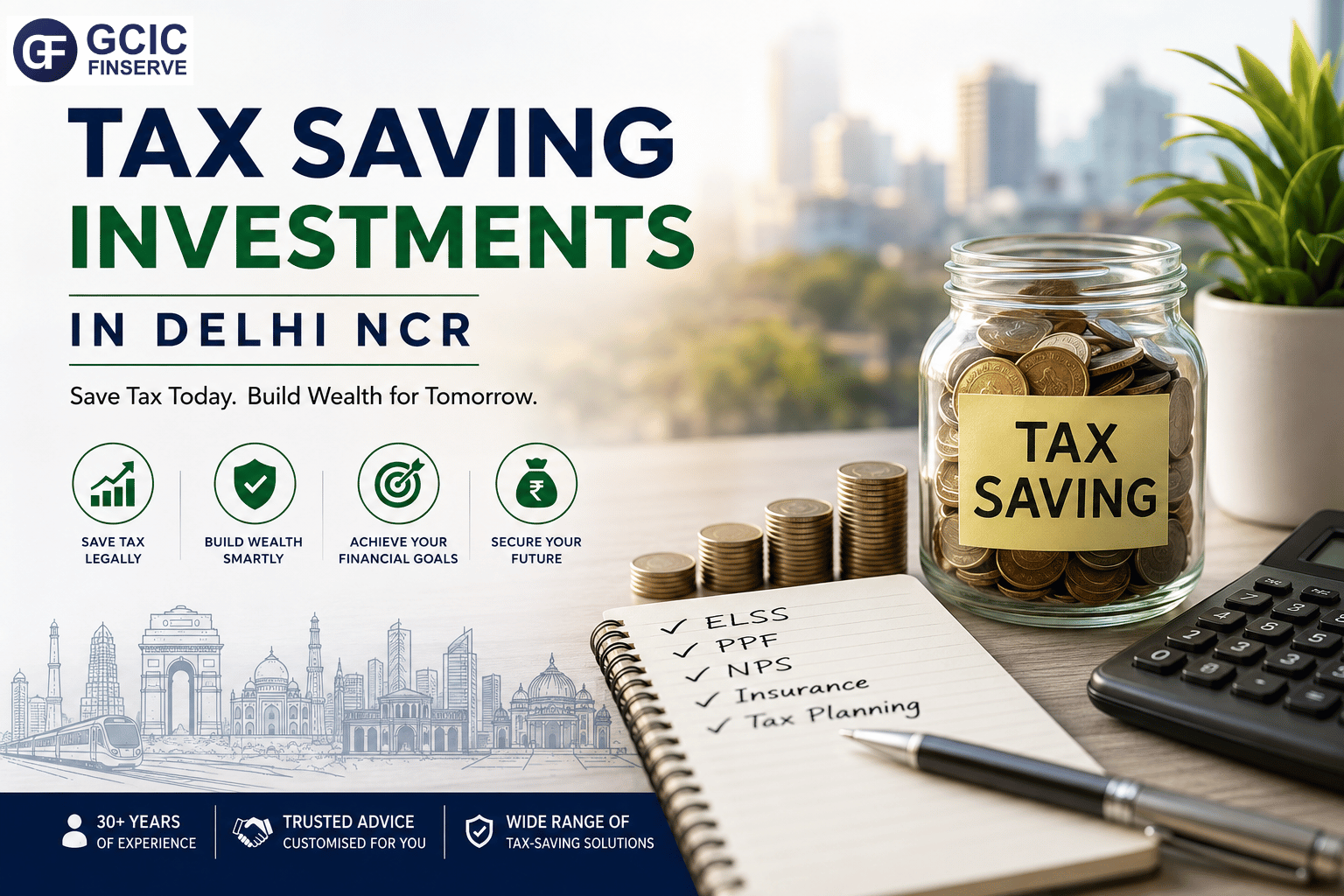
Tax saving investment Delhi NCR

Tax saving investment Delhi NCR
Explore tax saving investment options in Delhi NCR, including ELSS, PPF and NPS, to plan your taxes and build long-term wealth.

Tax saving investment Delhi NCR planning doesn’t have to mean scrambling in the last week of March. Yet that’s exactly how many investors approach tax planning—waiting until the financial year is nearly over, then choosing whatever is quickest to invest in. A smarter approach starts much earlier: understand your tax position, compare your options, and choose investments that support your larger financial goals as well as your tax planning needs.

If you’re in Delhi NCR—South Delhi, Noida, Ghaziabad, Gurgaon, or elsewhere in the region—there’s no shortage of tax-saving options. The right choice depends on your income, financial goals, risk tolerance, investment horizon, and the tax regime that applies to you.

What Is a Tax-Saving Investment?

In simple terms, a tax-saving investment is any investment or eligible payment that can reduce your taxable income under applicable income-tax provisions.

Some of the more commonly considered options are ELSS mutual funds, the Public Provident Fund (PPF), the National Pension System (NPS), life insurance premiums, and a handful of other eligible investments and payments.

But here’s a mistake worth avoiding: choosing something purely because it saves tax, without checking whether it actually makes sense for your financial goals. Tax saving should be a bonus, not the only reason you invest.

Why the Tax Regime You Choose Actually Matters

One thing a lot of people overlook: the difference between the old and new tax regimes changes which investments even matter for tax purposes.

For AY 2026–27, the new tax regime is the default option for eligible individual taxpayers, though you can still opt for the old regime if it suits you better. The old regime allows a wider set of deductions and exemptions—the new one is more limited.

What this means practically: an investment that gives you a deduction under the old regime might not save you anything under the new one. So before you invest purely to save tax, figure out which regime actually applies to you and whether the investment you’re considering genuinely helps under that regime.

Tax Saving Investment Delhi NCR: ELSS, PPF and NPS

ELSS Mutual Funds

Equity Linked Savings Schemes, or ELSS, are mutual funds that invest mostly in equities and are commonly used for tax planning under the old regime, subject to applicable conditions.

They pair tax-saving potential with market-linked growth—but that also means market risk comes along with it. ELSS tends to suit investors who understand equity risk and have a reasonable time horizon in mind.

PPF

PPF remains a favorite for more conservative investors looking at long-term savings. Eligible contributions can qualify for deductions under the old regime, within the prescribed limits and conditions.

A tax saving investment Delhi NCR plan that includes PPF may appeal to investors who prefer a more conservative, long-term savings approach.

NPS

NPS works well for investors who want retirement planning and tax benefits in one place. Depending on your eligibility and which regime you’ve chosen, certain NPS contributions can qualify for deductions under the Income Tax Act.

Don’t Invest Just Because Someone Says It’ll “Save Tax.”

This is probably the single most common mistake—picking an investment simply because someone told you it saves tax, without asking anything else.

Before you commit, it’s worth asking yourself a few honest questions:

  • What is my financial goal?
  • How much can I invest comfortably?
  • When will I need the money?
  • How much risk can I take?
  • What tax benefit am I actually eligible for?
  • Does the investment fit my existing portfolio?

Ideally, a tax-saving investment should do two things at once: move you closer to your financial goals and give you a genuine, applicable tax benefit. If it only does one of those, it’s worth reconsidering.

Why Consider GCIC Finserve for Tax-Saving Planning?

If you’re looking for tax saving investment options in Delhi NCR, GCIC Finserve can help you make sense of the different options and how they might fit into your broader financial plan.

GCIC Finserve is based in Greater Kailash II, South Delhi, with a team that brings 30 years of experience in the financial services and investment domain. Their services span mutual funds, fixed deposits, insurance, and tax-saving solutions.

The point isn’t to just find something that saves tax—it’s to look at your overall financial picture first and then work out which options genuinely fit.

Start Tax Planning Early

Good tax planning isn’t about rushing decisions in the last week of the financial year—it’s about making informed choices with enough runway to actually think them through.

If you’re exploring a tax saving investment Delhi NCR strategy or looking for tax planning support in South Delhi, GCIC Finserve can help you understand what’s available and build a plan around your actual financial goals.

Disclaimer: Tax laws, deductions, limits, and eligibility conditions may change. Tax benefits depend on the applicable tax regime and individual circumstances. This article is for educational purposes only and should not be considered tax, investment, or legal advice. Please consult a qualified tax professional for advice specific to your situation.

Equity Investment in Delhi NCR: A Smart Guide to Investing for the Long Term

Equity investment Delhi NCR

Equity investment Delhi NCR
Equity investment in Delhi NCR focused on long-term wealth creation, diversification and goal-based investing.

Equity investment Delhi NCR can be an effective way to participate in the long-term growth of businesses and the wider economy. For investors across South Delhi, Noida, Ghaziabad, Gurugram, and other parts of Delhi NCR, equity investments can have a place in a well-planned financial strategy. However, equity investments are market-linked and involve risk, so understanding your goals, risk appetite, and investment horizon is important before investing.

Choosing the right equity investment Delhi NCR approach depends on your financial goals, investment horizon, and tolerance for market fluctuations.

What Is Equity Investment Delhi NCR?

In plain terms, an equity investment means buying a stake in a company—either directly through shares or indirectly through products like equity mutual funds and other market-linked strategies.

When a company does well and its market value climbs, investors can benefit through capital appreciation. Some companies also pay dividends, though that depends entirely on their own policies and the applicable rules.

Of course, the reverse is true too. Equity prices fall as often as they rise, and there’s no such thing as a guaranteed return here. SEBI is fairly direct about this—investors should choose investments based on their own goals and risk appetite, not on tips or rumors picked up along the way.

Why Consider Equity for Long-Term Goals?

Equity tends to suit investors who can stay invested for the long haul and won’t panic every time the market has a rough week.

Instead of reacting to daily ups and downs, a long-term investor can stay focused on the bigger picture—things like

  • Building long-term wealth
  • Planning for retirement
  • Funding future education
  • Creating a diversified portfolio
  • Staying ahead of inflation over time

The point worth remembering: equity investing was never meant to be a quick-money game. It rewards patience and a disciplined approach far more than it rewards timing the market.

How Can You Actually Invest in Equity?

There’s more than one route in. You can buy individual shares directly through the securities market or go the diversified route through equity mutual funds and index funds.

If you’re investing directly in the market, you’ll typically need a bank account, a trading account, and a demat account set up first.

Which path makes sense for you really comes down to your own knowledge, your investment objective, how long you plan to stay invested, and how much risk you’re comfortable carrying.

Why Diversification Matters More Than It Seems

Putting all your money into one company, or even one sector, raises your concentration risk more than most people realize. Diversification spreads that exposure across different companies, sectors, or strategies—so one bad quarter for one company doesn’t sink your entire portfolio.

It’s exactly why many investors lean toward diversified equity funds or index-based approaches instead of trying to hand-pick individual stocks themselves.

Why Consider GCIC Finserve for Equity Investments?

If you’re exploring equity investment options in Delhi NCR, GCIC Finserve gives you access to a range of equity-oriented offerings.

GCIC Finserve offers equity exposure across index funds and active strategies through mutual funds and SMAs, which means investors have more than one way to approach equity depending on their own financial objectives and preferences.

The firm also emphasizes client relationships, with a team that brings 30 years of experience in the financial services and investment domain.

That said, chasing whatever’s performed well recently isn’t a strategy—it’s worth weighing your own goals, risk profile, time horizon, and overall portfolio before deciding where equity fits in.

Start With a Plan, Not a Tip

Equity investing means a lot more when it’s tied to an actual financial goal, rather than chased for its own sake. Markets will move—that’s normal—but impulsive decisions based on rumors, social media chatter, or short-term trends tend to create risks you don’t need to take on. SEBI has been clear about this too, cautioning investors against hot tips and urging them to understand a product and its risks before investing in it.

If you’re looking for equity investment options in Delhi NCR, GCIC Finserve can help you understand the different equity-oriented solutions available and build an approach around what you’re actually trying to achieve.


Disclaimer: Investments in the securities market are subject to market risks. There is no assurance or guarantee of returns. This article is for educational purposes only and should not be considered investment advice. Please consider your investment objectives, risk appetite, and investment horizon and review all applicable product documents before investing.

AIF in Delhi NCR: A Simple Guide to Alternative Investment Funds

AIF investment Delhi NCR – Alternative Investment Funds by GCIC Finserve


AIF investment Delhi NCR – Alternative Investment Funds by GCIC Finserve
AIF Investment in Delhi NCR – Alternative Investment Fund solutions by GCIC Finserve

AIF investment Delhi NCR is becoming an area of interest for investors looking beyond traditional options such as fixed deposits and mutual funds. As a portfolio grows, investors may explore different strategies, private markets, and opportunities that are not typically available through standard investment products.

That’s the space Alternative Investment Funds, or AIFs, occupy.

If you’re considering AIF investment in Delhi NCR—South Delhi, Gurgaon, Noida, or Ghaziabad—understanding how AIFs actually work can help you figure out whether this category has any place in your financial plan at all.

What Is an Alternative Investment Fund?

An AIF is essentially a privately pooled investment vehicle—it collects money from investors and puts it to work according to a defined strategy.

Unlike a traditional mutual fund, AIFs can offer exposure to a much wider range of strategies and asset classes, depending on which category and mandate they fall under.

SEBI splits AIFs into three broad categories—Category I, II, and III—each with its own investment objectives and regulatory characteristics.

Understanding the Three AIF Categories

Category 1 AIF (Category I AIF)

Category 1 AIF—also written as Category I AIF, or simply Cat 1 AIF—generally leans toward sectors seen as economically or socially beneficial: think venture capital, infrastructure, and a few other specified areas.

Category 2 AIF (Category II AIF)

Category 2 AIF, sometimes called Cat 2 AIF or Category II AIF, covers a much broader range of private investment strategies, including private equity and debt-oriented approaches. These tend to appeal to investors looking beyond what’s available in listed markets.

Cat 3 AIF (Category III AIF)

Cat 3 AIF, also referred to as Category 3 AIF or Category III AIF, can get more complex—this category is allowed to use leverage, subject to applicable regulations. That added complexity means understanding the strategy and its risks matters even more here.

Who Should Actually Consider AIF Investment?

AIFs are built for sophisticated investors—people who understand investment risk and can handle a longer horizon with lower liquidity than they might be used to.

For most standard AIFs, the regulatory minimum is ₹1 crore per investor, though exceptions exist—for accredited investors and certain fund structures, for instance—subject to applicable provisions.

Put simply: AIFs tend to make more sense for HNI investors with a larger portfolio, not someone looking for a quick, simple short-term investment.

What Do AIFs Actually Offer?

Depending on the fund and strategy, AIFs can bring:

  • Access to alternative investment strategies
  • Exposure to private or less traditional opportunities
  • Professional fund management
  • Portfolio diversification
  • Investment strategies designed around specific objectives

But none of this comes risk-free. AIF investments carry market risk, liquidity risk, strategy risk, and other product-specific risks. Past performance is never a promise of what comes next.

AIF Investment Delhi NCR: Why Consider It?

If you’re exploring AIF investment in Delhi NCR, it’s worth evaluating the fund manager, the investment strategy, fees, liquidity, lock-in or tenure, and the risk factors—and reading the complete placement memorandum—before putting any money in.

AIFs are largely private-placement products, and SEBI regulations require the fund’s strategy and methodology to be disclosed through the relevant documentation.

Working with an experienced financial-services professional can make it a lot easier to figure out whether a particular AIF actually fits into what you already hold.

GCIC Finserve: Your AIF Investment Advisor in South Delhi

For investors exploring AIF investment options in South Delhi or Delhi NCR, GCIC Finserve can help you understand the opportunities available and weigh them against your broader financial objectives.

GCIC Finserve is based in Greater Kailash II, South Delhi, with a focus on investment and financial-services solutions. Beyond AIFs, the broader offering includes mutual funds, fixed deposits, insurance, tax-saving solutions, and other investment-related services.

The goal shouldn’t be picking an AIF just because it delivered strong returns in the past. It’s about understanding the strategy, the risk, the costs, the liquidity, and whether it actually suits you before committing any capital.

Is AIF Right for You?

AIFs can be genuinely interesting for investors with a larger corpus who are comfortable with sophisticated strategies. But they’re not right for everyone.

Before investing, take the time to understand the fund’s strategy, risks, fees, liquidity, and investment horizon, along with every applicable document.

If you’re exploring alternative investment funds in Delhi NCR, GCIC Finserve can help you understand what’s available and evaluate it against your broader financial plan.


 Frequently Asked Questions About AIF Investment

What is the minimum investment for an AIF in India?

The standard minimum investment requirement is generally ₹1 crore per investor, subject to applicable SEBI regulations, exemptions, and the specific fund structure.

What are the three categories of AIFs?

AIFs are broadly classified by SEBI into Category I, Category II, and Category III, with different investment objectives and regulatory characteristics.

Are AIFs suitable for everyone?

No. AIFs are generally intended for investors who understand sophisticated investment strategies, can tolerate investment risk, and are comfortable with potentially lower liquidity.

Are AIF investments risky?

Yes. AIFs can involve market, liquidity, strategy, concentration, and other risks depending on the fund and its investment mandate.


Disclaimer: Investments in the securities market are subject to market risks. AIF investments involve significant risks and may have limited liquidity. The minimum investment amount, eligibility, fund structure, fees and other terms are subject to applicable SEBI regulations and the respective fund documents. This article is for educational purposes only and should not be considered investment advice. Please read the relevant Private Placement Memorandum and other documents carefully before investing.

Insurance in Delhi NCR: A Practical Guide to Life & Health Cover

Insurance planning Delhi NCR – life and health insurance coverage
Insurance planning in Delhi NCR for life protection, health coverage and financial security.

Insurance planning Delhi NCR is an important part of building a practical financial plan for individuals and families. Nobody plans for a medical emergency or a sudden loss of income—but life has a way of throwing curveballs anyway. A single hospital bill or an accident can undo years of careful saving in a matter of days.

If you are based in South Delhi, Noida, Gurgaon, Ghaziabad, or anywhere else across the NCR, the right cover acts as a buffer between your family and financial stress you didn’t see coming.

That said, insurance isn’t something you shop for the way you’d shop for anything else. It isn’t about picking whichever policy has the lowest premium—it’s about understanding what your family actually needs and finding protection that genuinely fits.

Why Insurance Planning Delhi NCR Matters

At its core, insurance protects you against specific risks that a policy covers. Instead of draining your savings the moment something goes wrong, insurance can step in and share that financial burden—within the terms of the policy, of course.

For most families, that safety net becomes a core part of how they plan financially, not an afterthought.

How much cover you need and what kind really depends on you—your age, your income, who depends on you, what you’ve already saved, what loans you’re carrying, and where you’re headed financially.

Life Insurance: A Safety Net for the People Who Depend on You

If your income supports your family, life insurance deserves serious thought. In simple terms, it’s designed to give your nominees financial support if something happens to you—based on what the policy actually promises.

If people depend on you—a spouse, children, or aging parents—or you’re paying off a home loan or planning for your kids’ education, this is one of those decisions worth revisiting every few years, not something you set once and forget.

Health Insurance: Cushioning the Cost of Medical Care

Medical bills in India have a way of climbing faster than most people expect. Health insurance exists to soften that blow, covering eligible expenses as defined by your policy’s terms—coverage limits, exclusions, and conditions included.

Here’s the thing: premium is usually the first number people look at and often the last thing that should decide their choice. What matters more is what’s actually covered—waiting periods, exclusions, room-rent limits, whether your preferred hospitals are in-network, and how smoothly claims actually get settled.

So How Do You Actually Choose the Right Policy?

Honestly, there’s no one-size-fits-all answer here. But before you sign anything, it helps to sit down and think through a few things:

  • What you’re earning and spending right now
  • Who depends on you financially
  • Any insurance you already have
  • Loans or other financial commitments
  • Where you want to be financially over the next 5–10 years
  • How much protection you actually need
  • What premium you can comfortably afford
  • The exclusions and conditions buried in the fine print

That last point matters more than people realize—reading the actual policy document, not just the brochure, is often the difference between a policy that helps when you need it and one that leaves you disappointed.

Why Talk to GCIC Finserve About Insurance Planning?

If you’re looking for insurance planning Delhi NCR guidance, GCIC Finserve can help you see where insurance fits into your bigger financial picture—rather than treating it as a one-off purchase.

GCIC Finserve is an investment distribution company built around client relationships, with a team that brings 30 years of experience in financial services and investing. Beyond insurance, the team also works with mutual funds, fixed deposits, and tax-saving solutions.

The company is based out of Greater Kailash II in South Delhi—a convenient option if you’re looking for financial guidance from someone local, whether you’re in South Delhi or elsewhere across the NCR.

Plan Your Protection Before You Actually Need It

Buying insurance isn’t about assuming the worst will happen. It’s about making sure that if it does, your family isn’t left scrambling.

If you’re exploring life insurance, health insurance, or insurance planning in Delhi NCR, GCIC Finserve can walk you through your options and help you land on a decision that actually fits your situation.

Disclaimer: Insurance is the subject matter of solicitation. Policy benefits, premiums, exclusions, waiting periods, eligibility, claim settlement and other terms are subject to the respective insurer’s policy terms and conditions. This article is for educational purposes only and should not be considered insurance, investment, legal or tax advice.

Fixed Deposit in Delhi NCR: Compare FD Rates & Invest Smart

Fixed Deposit investment options in Delhi NCR by GCIC Finserve
Explore Fixed Deposit investment options with GCIC Finserve in Delhi NCR.

Fixed Deposit Delhi NCR options can be worth considering for investors who prefer a simple and predictable investment approach. If you are exploring fixed deposit investment options in South Delhi, Noida, Gurgaon, or Ghaziabad, it is important to look beyond just the advertised interest rate.

What Is a Fixed Deposit?

A fixed deposit allows you to invest a lump sum for a selected period and earn interest according to the applicable terms. At maturity, the principal and applicable interest are paid as per the product conditions.

Fixed deposits are often considered by investors who value simplicity and want greater predictability when planning their finances. However, the suitability of an FD depends on factors such as the investment tenure, liquidity requirements, and the terms offered by the issuer.

What to Consider When Choosing a Fixed Deposit in Delhi NCR

Before choosing a fixed deposit, don’t simply select the option offering the highest interest rate. Consider the following factors:

  • FD interest rate: Compare the applicable rate for your chosen tenure.
  • Investment tenure: Choose a period that matches your financial goal.
  • Maturity amount: Understand what you may receive at maturity.
  • Premature withdrawal: Check the applicable rules and charges.
  • Taxation: Understand the tax treatment of FD interest based on your circumstances.
  • Issuer and product terms: Review the credibility and ratings where applicable and complete the terms of the deposit.

A slightly higher interest rate may not always mean a better choice if the product does not match your financial requirements, liquidity needs, or investment tenure.

Why Consider GCIC Finserve for Fixed Deposit Investment?

If you are searching for fixed deposit options in Fixed Deposit Delhi NCR, GCIC Finserve offers a relationship-focused approach to financial services.

Here are some reasons investors may consider working with GCIC Finserve:

1. A Team With 30 Years of Financial Services Experience

The GCIC Finserve team brings 30 years of experience in the financial services and investment domain. This experience can be valuable when you need help understanding different investment options and their suitability.

2. South Delhi Presence

GCIC Finserve is based in Greater Kailash II, South Delhi, and serves clients across Delhi NCR, including South Delhi, Noida, Gurugram, and Ghaziabad.

3. Relationship-Focused Service

Rather than simply presenting a financial product, GCIC Finserve focuses on understanding clients’ financial objectives and providing solutions around their requirements.

4. Multiple Investment Solutions Under One Roof

GCIC Finserve provides access to financial solutions, including mutual funds, fixed deposits, insurance, and tax-saving solutions. This allows investors to consider an FD as part of their broader financial plan rather than making an investment decision in isolation.

5. Portfolio Tracking

GCIC Finserve also provides a portfolio-tracking app that allows clients to monitor their investments in one place, subject to the assets and features supported by the platform.

Is GCIC Finserve the Right Choice for You?

There is no single fixed deposit that is best for every investor. The right option depends on factors such as your investment amount, financial goals, liquidity requirements, preferred tenure, and overall portfolio.

If you are looking for FD investment guidance in South Delhi or Delhi NCR, GCIC Finserve can help you understand the available options and make a decision based on your financial requirements.

With a South Delhi presence and a team bringing decades of financial-services experience, GCIC Finserve aims to build long-term client relationships through a personalized approach.


Disclaimer: This article is for educational and informational purposes only and should not be considered investment, tax, or legal advice. Fixed deposit rates, product features, eligibility, and terms may change. Please review the latest applicable terms and conditions before investing.

PMS in Delhi NCR: A Simple Guide to Portfolio Management Services

PMS in Delhi NCR - Portfolio Management Services by GCIC Finserve South Delhi
Overview of Portfolio Management Services (PMS) in Delhi NCR with GCIC Finserve.

Once a portfolio grows past a certain size, picking individual stocks or a handful of mutual funds can start to feel less like a strategy and more like guesswork. That’s usually the point where investors start looking for something more structured—built specifically around their own goals risk profile and preferences.

This is exactly the space Portfolio Management Services, or PMS, occupies.

For investors across Delhi NCR—South Delhi, Noida, Gurgaon, and Ghaziabad—understanding how PMS actually works can help you figure out whether it belongs in your overall investment strategy at all.

What Is Portfolio Management Services?

Put simply, PMS is a professional investment management service where a portfolio manager runs your investments according to an agreed strategy and your specific requirements.

SEBI recognizes a few different structures here—discretionary PMS and non-discretionary PMS, along with advisory services. In discretionary PMS, the portfolio manager makes the actual investment decisions within the agreed mandate. Non-discretionary PMS keeps you, the investor, involved in that decision-making process instead.

Unlike a mutual fund that pools money across many investors into one common portfolio, PMS is built around a single client’s mandate—it’s genuinely individual.

Why Do Investors Consider PMS?

PMS tends to appeal to investors who already have a sizable investment corpus and want something more tailored than a standard fund.

A few things typically draw investors toward it:

  • A portfolio designed around specific objectives
  • Professional investment management
  • Greater visibility into individual securities
  • Strategies based on defined investment mandates
  • Portfolio monitoring and reporting

That said, PMS isn’t a guaranteed-return product—market movements affect its value just like any other market-linked investment, and understanding those risks matters before you commit.

SEBI also requires portfolio managers to disclose fees, risks, and performance information clearly. Reading the disclosure document and the agreement carefully, before signing anything, isn’t optional—it’s genuinely worth your time.

Is PMS Suitable for Everyone?

PMS generally makes more sense for investors with a substantial corpus, a real understanding of market risk, and a comfort level with a professionally managed, strategy-driven portfolio.

Under the current SEBI framework, PMS requires a minimum investment of ₹50 lakh per client, with some exceptions—for accredited investors, for instance—subject to applicable provisions.

Before going down this route, it’s worth weighing your financial goals, risk appetite, investment horizon, liquidity needs, and existing portfolio as a whole.

Why Consider GCIC Finserve for PMS?

If you’re looking into PMS in Delhi NCR, GCIC Finserve can help you explore PMS opportunities through its distribution platform.

GCIC Finserve is based in Greater Kailash II, South Delhi, and is identified on its website as an APMI Registered PMS Distributor. The team also brings 30 years of experience in the financial services and investment domain, with a strong focus on client relationships.

GCIC’s portfolio-tracking platform also covers PMS alongside mutual funds, shares, fixed deposits, and other investments—useful if you’d rather see everything in one place instead of juggling multiple logins.

PMS Should Start With Your Goals

Choosing a PMS strategy shouldn’t come down to whichever one posted the highest past return—that’s rarely the right way to pick one. A better approach looks at the investment philosophy behind it, the risk involved, the fees, how the portfolio is actually constructed, and whether any of it lines up with what you’re actually trying to achieve.

If you’re exploring portfolio management services in Delhi or South Delhi, GCIC Finserve can help you understand the available PMS options and evaluate whether one genuinely fits your broader investment plan.

Disclaimer: Investments in the securities market are subject to market risks. PMS does not guarantee returns. PMS services are provided by SEBI-registered portfolio managers and are subject to applicable regulations and terms and conditions. GCIC Finserve acts as an APMI Registered PMS Distributor. Please review the relevant disclosure documents and agreements carefully before investing. This article is for educational purposes only and should not be considered investment advice.

SIF Funds in Delhi NCR: A Simple Guide to Specialized Investment Funds

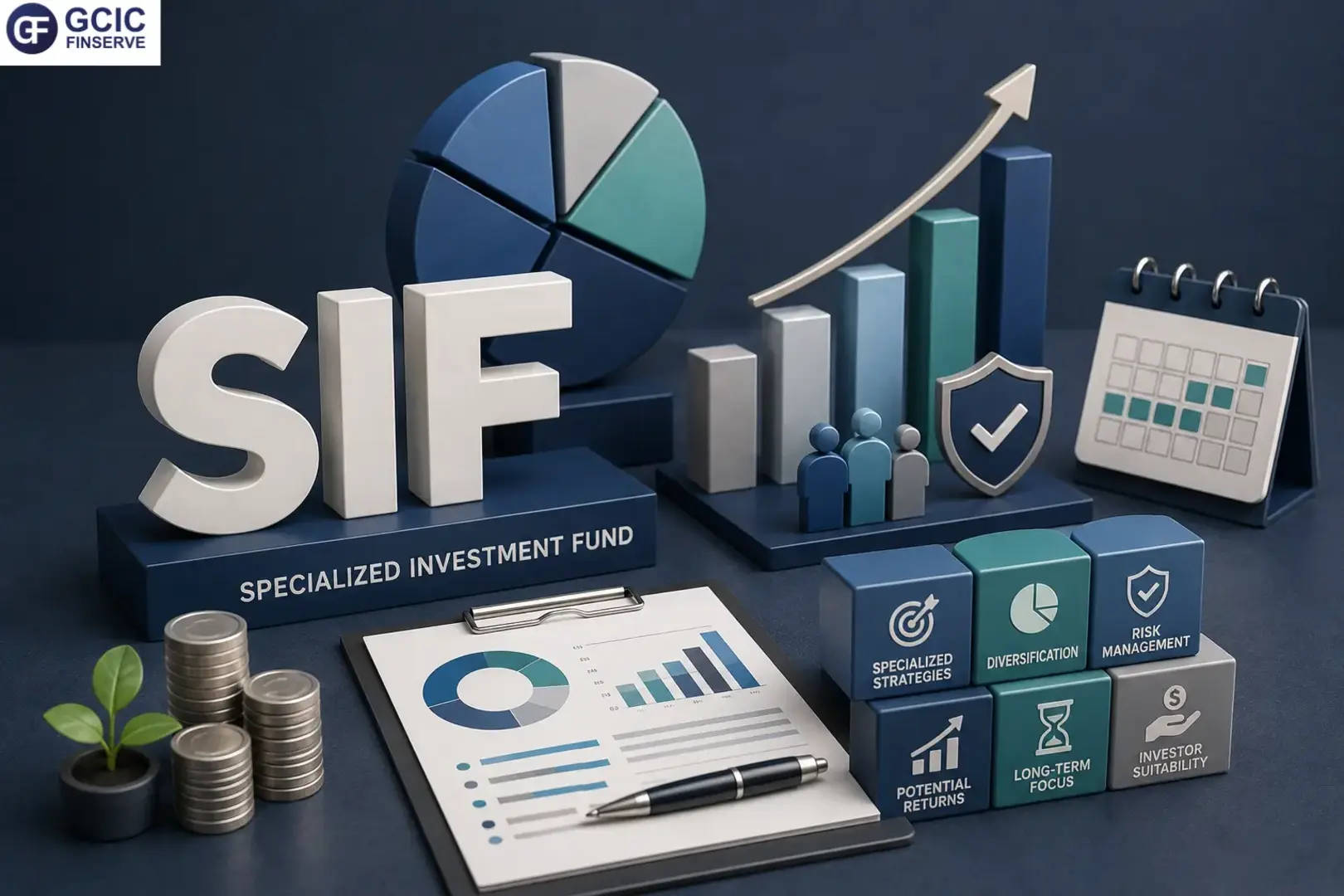
SIF funds in Delhi NCR - Specialized Investment Fund
SIF investment options and Specialized Investment Funds for investors in Delhi NCR.

SIF funds in Delhi NCR are becoming an emerging investment option for investors looking to explore specialised investment strategies. Along with traditional mutual funds, investors now have access to newer structures designed for people looking for more specialised investment strategies.

One such option is the Specialized Investment Fund (SIF).

If you are an investor in Delhi NCR, South Delhi, Gurgaon, Noida or Ghaziabad, you may have recently come across the term SIF. But what exactly is it, how does it work and who should consider it?

Let’s understand it in simple terms.

What Is a Specialized Investment Fund?

A Specialized Investment Fund, commonly known as SIF, is a regulated investment structure within the mutual fund framework.

SIFs are designed to provide more specialised investment strategies while operating under SEBI’s regulatory framework. They can offer investors strategies that may have different levels of flexibility and risk compared with conventional mutual fund schemes.

In simple words, SIF funds are designed for investors who want to explore more specialised investment approaches rather than sticking only to traditional mutual fund categories.

How Is SIF Different From a Regular Mutual Fund?

The biggest difference is the investment strategy and flexibility.

Regular mutual funds operate within established scheme categories and investment limits. SIFs are designed to accommodate specialised strategies within the regulatory framework.

However, more flexibility does not automatically mean better returns.

The performance of an SIF will depend on its investment strategy, portfolio construction, market conditions and fund management. Investors should therefore look at the complete investment strategy instead of choosing a fund only because it is new or has performed well recently.

Who Can Consider SIF Investment?

SIF investment may be relevant for investors who have a larger investment portfolio, understand market risk and are comfortable with specialised strategies.

Under the current framework, the aggregate investment threshold for an investor across SIF investment strategies is generally ₹10 lakh, with applicable provisions and exceptions, including for accredited investors.

This makes SIF different from many conventional mutual fund investments and means investors should carefully assess whether the product is appropriate for them.

What Should You Check Before Investing?

Before selecting any SIF, don’t focus only on returns.

  • Investment strategy
  • Risk level
  • Portfolio construction
  • Fund manager’s approach
  • Investment horizon
  • Liquidity and exit conditions
  • Applicable fees and expenses
  • Minimum investment requirement
  • Relevant scheme and offer documents

Understanding these factors can help you make a more informed decision.

Why Consider SIF Investment in Delhi NCR?

For investors searching for SIF in Delhi NCR, getting proper information before investing is especially important because SIF is still a relatively new category.

Instead of choosing an investment simply because it sounds sophisticated, investors should first understand how it fits into their existing portfolio.

A well-planned portfolio should consider your financial goals, risk tolerance, investment horizon and liquidity requirements.

Why Consider GCIC Finserve?

If you are exploring SIF investment in Delhi or South Delhi, GCIC Finserve can help you understand available SIF opportunities and the investment process.

GCIC Finserve is based in Greater Kailash II, South Delhi, and its website identifies the company as an AMFI Registered Mutual Fund Distributor and SIF Distributor. The company also states that its team has 30 years of experience in the financial services and investment domain.

GCIC Finserve

The aim should be to understand the product first and then decide whether it fits your investment objectives.

Is SIF Right for You?

SIF can be an interesting option for investors looking for specialised investment strategies, but it is not suitable for everyone.

Before investing, understand the strategy, risks, costs, liquidity and minimum investment requirements. Don’t select an SIF simply because of past performance or market trends.

If you are exploring SIF funds in Delhi NCR, taking a structured approach can help you understand whether this relatively new investment category has a suitable place in your portfolio.


Frequently Asked Questions About SIF

What should I check before investing in an SIF?

Don’t look at returns alone. Check the investment strategy, risk level, portfolio approach, fund manager, fees, liquidity, minimum investment and scheme documents before making a decision.

How can I explore SIF investment in Delhi NCR?

You can start by understanding how SIF works and whether it fits your existing portfolio. If you’re considering SIF investment in Delhi NCR, discussing your requirements with a registered distributor can help you understand the available options and process.


Disclaimer: Mutual fund investments are subject to market risks. SIF investments involve risks and may not be suitable for every investor. Minimum investment requirements, eligibility, investment strategies and other conditions are subject to applicable SEBI regulations and the respective scheme documents, which may change from time to time. This article is for educational purposes only and should not be considered investment advice. Please read all relevant documents carefully before investing. SEBI has also issued specific certification requirements for distribution of SIFs in July 2026.